
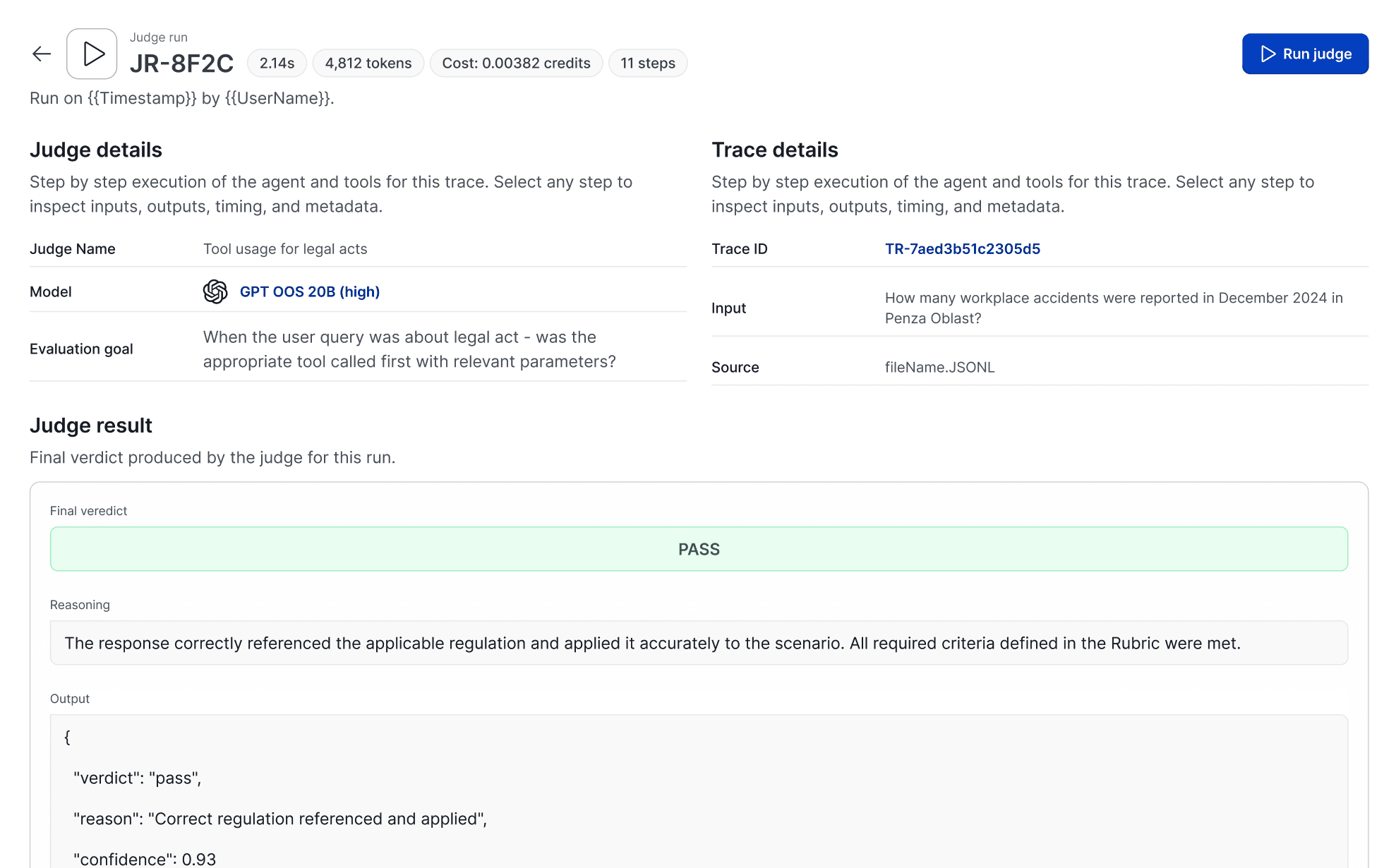
Stop silent failures before they reach users
A common agent failure looks like this:
The agent selects an incorrect tool parameter
The tool call succeeds
The final answer appears correct
The output passes
The underlying system state is now wrong
These failures don’t show up in single-output tests.
Why standard model evaluations miss the mark
Most evaluation methods were designed for single responses.
Agent behavior unfolds over time:
Make sequential decisions
Call tools with real side effects
Change internal and external state
Retry, recover, or drift
What evaluations actually assess
Agentic Evaluations examine behavior across a full execution, including:
Reasoning aligns with actions
Tool calls and parameters are appropriate
Retries and recovery are handled
State transitions remain aligned with the task
Codify safety and quality standards
Evaluation criteria are explicitly defined and can include:
Natural language assertions
Deterministic rules
Enforce tool usage limits, parameter formats, and state invariants
Judge-based assessment
Apply probabilistic evaluation when strict rules are insufficient
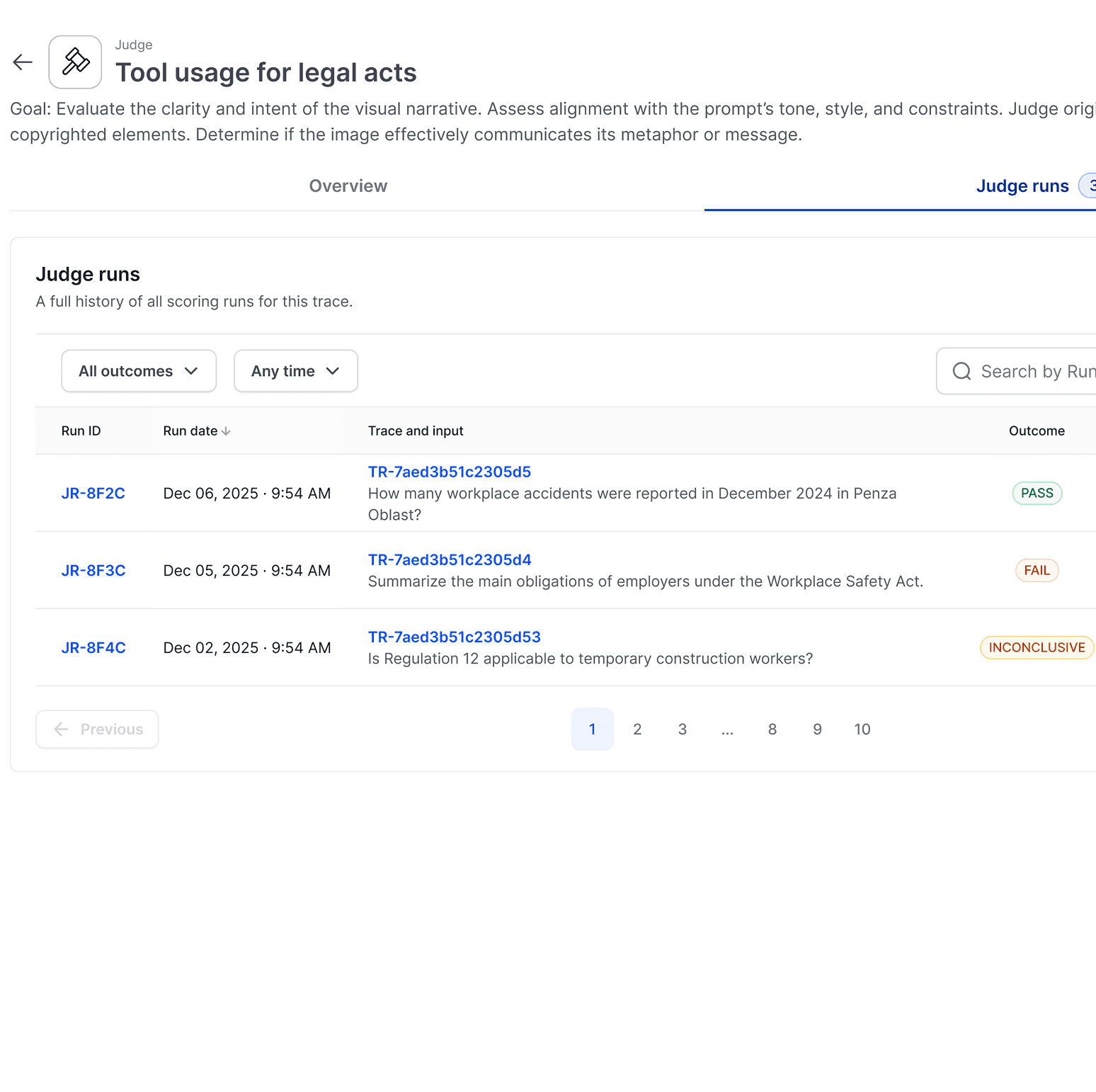
Audit trails and regression detection
Each evaluated run produces:
Pass / fail verdicts
Used to inform release decisions
Root-cause explanations
Trace-level insight showing where behavior diverged
Historical comparison
Records that enable regression detection across agent versions
When teams use agentic evaluations
Teams rely on agentic evaluations when:
An agent is prepared for deployment
Agent logic or prompts change
A new tool or integration is introduced
Agent autonomy or permissions increase
Bring agent behavior under control before production
Agentic Evaluations provide evidence of agent behavior before autonomy is granted.